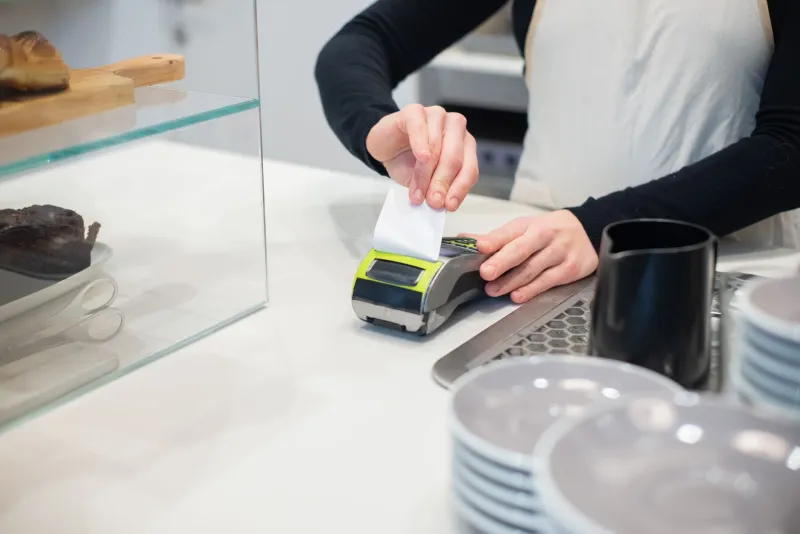
The Hidden Math Behind Your Receipt Paper Bill: A Small Business Cost Checkup

Let's be honest: receipt paper is one of those supply-line items that rarely gets a second look. You order a case, stock the shelf, and move on. But what if that "set it and forget it" approach is quietly draining your budget every single month?
At Free Receipt Paper, we've seen it happen over and over again — small business owners who think they're spending $30 or $40 a month on paper supplies, only to realize they're closer to double that once you account for waste, bad buys, and compatibility issues. So let's do something about it. Here's a practical, no-fluff cost checkup you can run on your own operation right now.
Step 1: Count Every Device That Eats Paper
This sounds obvious, but you'd be surprised how many business owners forget about the receipt printer at the customer service desk, the one in the break room that prints shift reports, or the portable Bluetooth unit the delivery driver carries.
Grab a notepad (or a spreadsheet if you're feeling fancy) and list every single paper-consuming device in your operation. For each one, write down:
- The printer make and model
- The paper width it requires (most common are 2 1/4", 3 1/8", and 4")
- How many rolls you go through in a typical week
If you run multiple locations, do this for each one separately. The numbers often look very different from store to store, even when they're running the same volume of transactions.
Step 2: Do the "Actual Cost Per Roll" Math
Here's where things get interesting. Most people look at the case price and divide by the number of rolls. But that's not your actual cost per roll — not even close.
To get the real number, you need to factor in:
Shipping and handling. If you're paying freight on a 36-roll case every few weeks, that adds up fast. A case that looks like $28 can easily become $38 or more after delivery fees.
Minimum order requirements. Some suppliers require you to buy more than you need just to hit a free shipping threshold. Those extra rolls you didn't need? They're costing you money.
Expired or degraded stock. Thermal paper has a shelf life — typically two to three years under good storage conditions, but much shorter if it's stored near heat sources or in direct sunlight (which is common in back-of-house storage areas). If you've ever pulled a roll off the shelf and noticed the print fading almost immediately, you may be using paper that's already past its prime. That roll is essentially wasted money.
Try this quick formula:
True Cost Per Roll = (Case Price + Shipping) ÷ Rolls Actually Used Before Expiration or Damage
If you're tossing even two or three rolls per case due to storage issues or over-ordering, your true cost per roll jumps significantly.
Step 3: Identify Your "Orphan Inventory" Problem
Orphan inventory is the term for supplies you've bought that are sitting unused — usually because a device was upgraded, a location closed, or you switched POS systems and the new printer takes a different paper size.
Check your storage room right now. How many partial cases are sitting there that don't match any of your current printers? How many rolls were bought in bulk during a "deal" that you've never actually gotten around to using?
This is one of the most common — and most fixable — sources of receipt paper waste we see at Free Receipt Paper. The fix is simple: before you order, verify the exact specs your current devices need, and don't buy more than a 60-day supply unless you have a very predictable, stable usage pattern.
Step 4: Check for Printer Compatibility Waste
Using the wrong paper in a printer doesn't just produce bad receipts — it can quietly inflate your costs in ways you'd never expect.
For example, thermal paper that's too thin for a particular printer head may produce faint receipts that customers can't read, leading to reprints. Paper that's slightly the wrong width can cause jams, wasting partial rolls and adding wear to your equipment. And if you're running BPA-free paper in a printer that was calibrated for standard thermal paper, the output quality may be inconsistent enough that you end up printing duplicates more often than you'd like.
Each of those scenarios is a small leak in your budget, but they add up. A reasonable estimate: if you're reprinting or wasting even one roll per week per device due to compatibility issues, you could be losing $5 to $15 per device per month — and that's before you factor in the labor time to deal with jams and complaints.
Step 5: Run the Monthly Waste Estimate
Now put it all together. Here's a simple monthly waste estimate worksheet:
| Waste Source | Estimated Monthly Loss |
|---|---|
| Over-ordering / expired stock | $_____ |
| Orphan inventory (wrong size/type) | $_____ |
| Shipping fees on small orders | $_____ |
| Reprints from compatibility issues | $_____ |
| Total Estimated Monthly Waste | $_____ |
For a small retailer with two or three POS terminals, it's not unusual to land somewhere between $20 and $75 per month in avoidable waste. Across a year, that's real money — the kind that could cover a piece of equipment, a marketing push, or simply stay in your pocket.
What to Do With Your Numbers
Once you've run this checkup, you've got something valuable: clarity. You know where the leaks are, which means you can actually plug them.
The most effective fixes tend to be the simplest ones:
- Standardize your paper specs across devices wherever possible, so you're not juggling three different roll widths.
- Order on a regular cycle that matches your actual usage — not when you panic because you're almost out, which leads to expensive rush orders.
- Store your paper properly — cool, dry, away from heat and light — to protect the shelf life you're paying for.
- Buy from a source that offers flexible quantities, so you're not forced into bulk minimums that create orphan inventory.
That last point is something we think about a lot at Free Receipt Paper. The goal isn't just to sell you paper — it's to help you buy the right amount of the right paper, so you're never wasting a roll or a dollar. Running this kind of cost checkup every quarter takes maybe 20 minutes and can save you hundreds over the course of a year. That's the kind of math we can all get behind.