What Your Receipt Paper Invoice Is Really Telling You (And What It's Hiding)
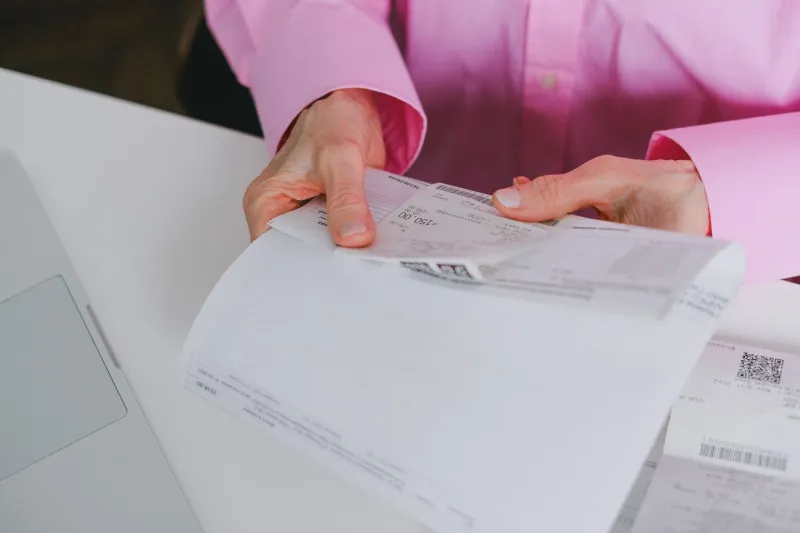
Let's be honest — when was the last time you actually read your receipt paper invoice? Not just glanced at the total, but really dug into every line? If you're like most small business owners, the answer is probably never. And that's exactly what your supplier is counting on.
Receipt paper is one of those operating costs that flies so far under the radar that it almost never shows up in quarterly reviews or budget conversations. It's just... there. You order it, it arrives, you use it. But that casual relationship with a seemingly small expense is costing a lot of US retailers more than they realize — sometimes hundreds, occasionally thousands, of dollars a year in markups and fees they never agreed to.
Let's break it all down.
The Markup You Never Negotiated
Here's something receipt paper suppliers don't advertise: the per-roll price you're paying almost certainly includes a built-in distributor markup that has nothing to do with the actual cost of manufacturing or shipping the product.
On commodity-grade thermal receipt paper, manufacturer costs have stayed relatively flat for years. But retail and wholesale prices through traditional distributors? Those have crept up steadily, often justified by vague references to "supply chain pressures" or "raw material costs." Some distributors are marking up standard 3 1/8" x 230' rolls by 30 to 50 percent above what comparable rolls cost through direct-to-retailer or bulk suppliers.
The fix here is simple but requires a little homework: pull your last three invoices, note the per-roll price, and spend 20 minutes comparing it against current pricing on direct-supply platforms. If you see a gap bigger than 15 to 20 percent, you have leverage for a negotiation conversation — or a reason to switch.
Minimum Order Fees: The Quiet Tax on Small Buyers
This one stings especially for small businesses. Many traditional receipt paper suppliers have minimum order thresholds — typically somewhere between $50 and $150 — and if you fall below that threshold, you get hit with a "small order fee" that can range from $5 to $25 per transaction.
For a café that orders a case of paper every six weeks, that fee might not seem like much. But add it up across a year and you're looking at $40 to $200 in charges that exist solely because your supplier's fulfillment model isn't designed for your purchase volume.
The smarter move is to either batch your orders to consistently hit the minimum threshold, or find a supplier whose pricing model is actually built for small-volume buyers. A lot of online receipt paper suppliers have eliminated minimum order fees entirely — and that's a real, tangible saving that adds up.
Delivery Surcharges: The Line Item Nobody Questions
Flip to the bottom of your invoice. See a line that says something like "fuel surcharge," "handling fee," or "residential delivery adjustment"? Those are delivery surcharges, and they're often applied semi-automatically without much transparency about how they're calculated.
Fuel surcharges in particular have become a gray area for many distributors. Originally tied to diesel price fluctuations, many suppliers kept these surcharges in place long after fuel prices stabilized — effectively turning a variable cost adjustment into a permanent revenue line. Some businesses are paying an extra 3 to 8 percent on every order through surcharges they've never questioned.
When you call to negotiate (more on that in a moment), ask specifically about removing or capping delivery surcharges. Many suppliers will waive them for customers who ask directly, especially if you're placing regular orders.
Supplier Lock-In: The Subtle Trap
Some receipt paper suppliers use tactics that make switching feel harder than it actually is. Auto-renewal contracts, proprietary account portals that obscure pricing comparisons, and bundled supply agreements that tie receipt paper to other equipment or service contracts are all designed to create inertia.
If your receipt paper comes bundled with your POS maintenance agreement or your credit card processing contract, you're almost certainly paying a premium for the convenience — and the supplier knows you're unlikely to unbundle it. That's a deliberate strategy.
The reality is that thermal receipt paper is a commodity. Compatibility between rolls and printers is determined by standard dimensions (width and diameter), not brand relationships. You can almost always swap suppliers without touching your hardware. Don't let a bundled contract convince you otherwise.
How to Actually Read Your Invoice
Here's a quick field guide for the next time your invoice lands in your inbox:
- Unit price per roll — Compare this against at least two alternative suppliers quarterly.
- Case quantity and case price — Make sure you're calculating per-roll cost, not just reacting to the case total.
- Small order or minimum order fees — Look for any line item with the word "fee" that isn't shipping.
- Delivery and surcharge lines — Fuel, handling, residential — these are all negotiable.
- Contract or account terms — Check whether you're on a locked pricing agreement or month-to-month.
Five minutes with your last invoice and this checklist will tell you more about where your money is actually going than a year of just approving charges.
Negotiation Strategies That Actually Work
You don't need to be a procurement expert to push back on receipt paper costs. A few approaches that consistently work for small business owners:
Volume commitment in exchange for price breaks. Even if you're a small buyer, offering to commit to a consistent monthly order can unlock wholesale pricing tiers. Suppliers value predictability.
Competitive quotes as leverage. Pull a real quote from an alternative supplier and bring it to your current rep. Most distributors have some pricing flexibility they don't volunteer upfront.
Request itemized breakdowns. Simply asking for a line-by-line breakdown of what you're paying often prompts suppliers to proactively remove or reduce add-on fees.
Annual contract review. If you're on a contract, request a pricing review at renewal. Costs for thermal paper have generally not increased enough to justify year-over-year price hikes — and you're entitled to ask why yours went up.
The Bottom Line
Receipt paper isn't glamorous, and the savings from optimizing your supply costs aren't going to retire your mortgage. But for a small retailer spending $300 to $600 a year on paper supplies, shaving 20 to 30 percent through smarter purchasing is real money — money that stays in your business instead of quietly padding a distributor's margin.
Your invoice has been telling you a story for years. It's worth finally reading it.