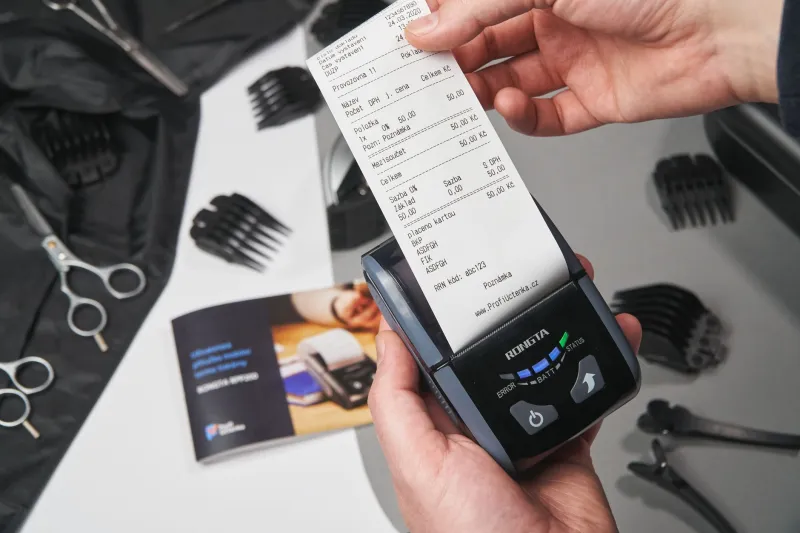
Receipt Paper Rules Are Changing: Here's What US Small Businesses Must Know Before 2025

If you're a small retailer, you probably don't spend a lot of time thinking about receipt paper compliance. You've got inventory to manage, staff to schedule, and customers to keep happy. Paper is just paper.
Except when it isn't.
The reality is that receipt paper sits at the intersection of several overlapping regulatory frameworks—tax law, payment card industry standards, warranty documentation requirements, and even emerging environmental regulations. Get it wrong, and you could face audit complications, voided warranties, or data security exposure. Get it right, and your paper choices actually become a quiet layer of protection for your business.
This guide is designed to make that easier. No legal jargon. No unnecessary complexity. Just what you need to know.
IRS Receipt Retention: What the Rules Actually Say
Let's start with taxes, because this is where most small business owners have the most direct exposure.
The IRS generally requires businesses to retain records—including sales receipts—for a minimum of three years from the date the return was filed. However, if the agency suspects a substantial understatement of income (more than 25%), that window extends to six years. In cases of suspected fraud, there's no limit at all.
Here's where your paper choice becomes a compliance issue: thermal receipt paper, the kind used in virtually all modern POS printers, is notorious for fading over time. Standard low-quality thermal paper can become unreadable in as little as six months under normal storage conditions—exposed to heat, light, or friction.
If you're relying on paper receipts as part of your business records and you're using paper that fades before the IRS retention window closes, you have a documentation gap. That gap can complicate an audit even if your finances are perfectly in order.
What to do: Use receipt paper rated for long-term image stability—look for thermal paper that specifies archival life of seven years or longer under standard storage conditions. Alternatively, invest in a receipt management system that creates digital backups, but make sure your physical copies hold up in the meantime.
PCI DSS Compliance and Your Receipt Paper
The Payment Card Industry Data Security Standard (PCI DSS) is the framework that governs how businesses handle credit and debit card information. Most small retailers know the basics—don't store full card numbers, use encrypted terminals—but fewer realize that receipt printing practices fall under this umbrella too.
PCI DSS requirements specifically address what can and cannot appear on a printed customer receipt. The key rules:
- The full primary account number (PAN) cannot be printed. Only the last four digits of the card number may appear.
- The card verification code (CVV/CVC) must never be printed on any receipt, merchant or customer copy.
- Expiration dates should be masked or omitted entirely on customer receipts.
These aren't suggestions—they're requirements. Violations can result in fines from card networks, increased transaction fees, or in serious cases, loss of the ability to accept card payments altogether.
The paper itself doesn't cause a PCI violation, but here's the indirect connection: if you're using paper that produces unclear or partially printed receipts due to poor thermal coating quality, your POS software's masking functions may not render correctly. A smeared or partially printed receipt could inadvertently expose data that should have been masked. It's an edge case, but it's a real one.
For PCI compliance, your best protection is a combination of properly configured POS software and receipt paper that prints cleanly and consistently every time.
Warranty Documentation: The Paper That Protects Your Customers (and You)
Many consumer products sold at retail require a dated, itemized receipt to activate or honor a manufacturer's warranty. This is especially common in electronics, appliances, tools, and automotive parts—categories where small retailers compete directly with big-box stores.
When a customer can't read their receipt because it's faded, smeared, or printed on paper that degraded in their wallet, they often come back to you—not the manufacturer—looking for resolution. And if you can't produce a clean merchant copy either, you've got a problem.
Federal warranty law (the Magnuson-Moss Warranty Act) doesn't require you to provide receipts in a specific format, but it does establish that written warranties must be honored when customers meet reasonable documentation requirements. If your receipts routinely fail to serve as valid proof of purchase, you're creating unnecessary friction in your customer relationships and potential exposure to small claims disputes.
High-quality receipt paper that holds its image and produces sharp, readable text is a simple, low-cost way to keep your warranty documentation solid.
BPA-Free Requirements: Where Things Are Heading
Bisphenol A (BPA) is a chemical used in the thermal coating of many standard receipt papers. It's been a health concern for years, particularly for retail workers who handle large volumes of receipts daily. Studies have shown that BPA can be absorbed through skin contact, and it's classified as an endocrine disruptor.
As of 2024, no federal law in the US mandates BPA-free receipt paper for retailers, but the regulatory landscape is shifting. Several states—including California under Proposition 65—require businesses to provide warnings about BPA exposure in certain contexts. The EU has already moved to ban BPA in thermal paper, and US standards typically follow European precedents within a few years.
Beyond regulatory risk, there's a practical business consideration: employees who handle receipts constantly may prefer or even request BPA-free options. Offering BPA-free paper is a low-cost way to demonstrate that you care about your team's wellbeing.
At Free Receipt Paper, we carry BPA-free thermal rolls that meet current standards and position your business ahead of where regulations are likely heading.
Thermal Paper Specs: The Numbers That Matter
When you're shopping for compliant, high-performance receipt paper, a few technical specs are worth understanding:
- Brightness rating: Measured on a scale, higher brightness (85+) means better contrast and more legible receipts. Important for readability and documentation purposes.
- Thermal sensitivity: Indicates how quickly the paper responds to heat. Mismatched sensitivity can cause light printing or require your printer to work harder, reducing head life.
- Paper weight (gsm): Most thermal receipt printers perform best with paper in the 55–65 gsm range. Heavier paper can cause feed issues; lighter paper tears easily.
- Image stability rating: Look for paper rated to hold the printed image for 7–10 years in standard storage (away from heat, light, and chemicals).
- Roll dimensions: Always match the roll width and outer diameter to your printer's specifications. This is the single most avoidable source of printer jams.
Putting It All Together
Compliance doesn't have to be complicated. For most small US retailers, the practical checklist looks like this:
- Use thermal paper with a 7+ year image stability rating to cover IRS retention windows.
- Verify your POS software masks card data correctly—and use quality paper that prints every character cleanly.
- Keep merchant copies organized and readable to support warranty claims and potential audit requests.
- Switch to BPA-free paper to stay ahead of emerging regulations and protect your staff.
- Match your paper specs to your printer model to avoid jams, print head wear, and premature equipment failure.
The good news? Meeting all of these requirements doesn't require a compliance officer or a legal team. It mostly requires choosing the right paper from the start—which is exactly what we're here to help you do.
At Free Receipt Paper, every roll we carry is selected with small business realities in mind: the right specs, the right price, and the documentation quality to keep you protected. Because saving money on supplies should never mean cutting corners on the things that actually matter.